Mind and Matter: How Consciousness, Quantum Physics, and Reality Intersect
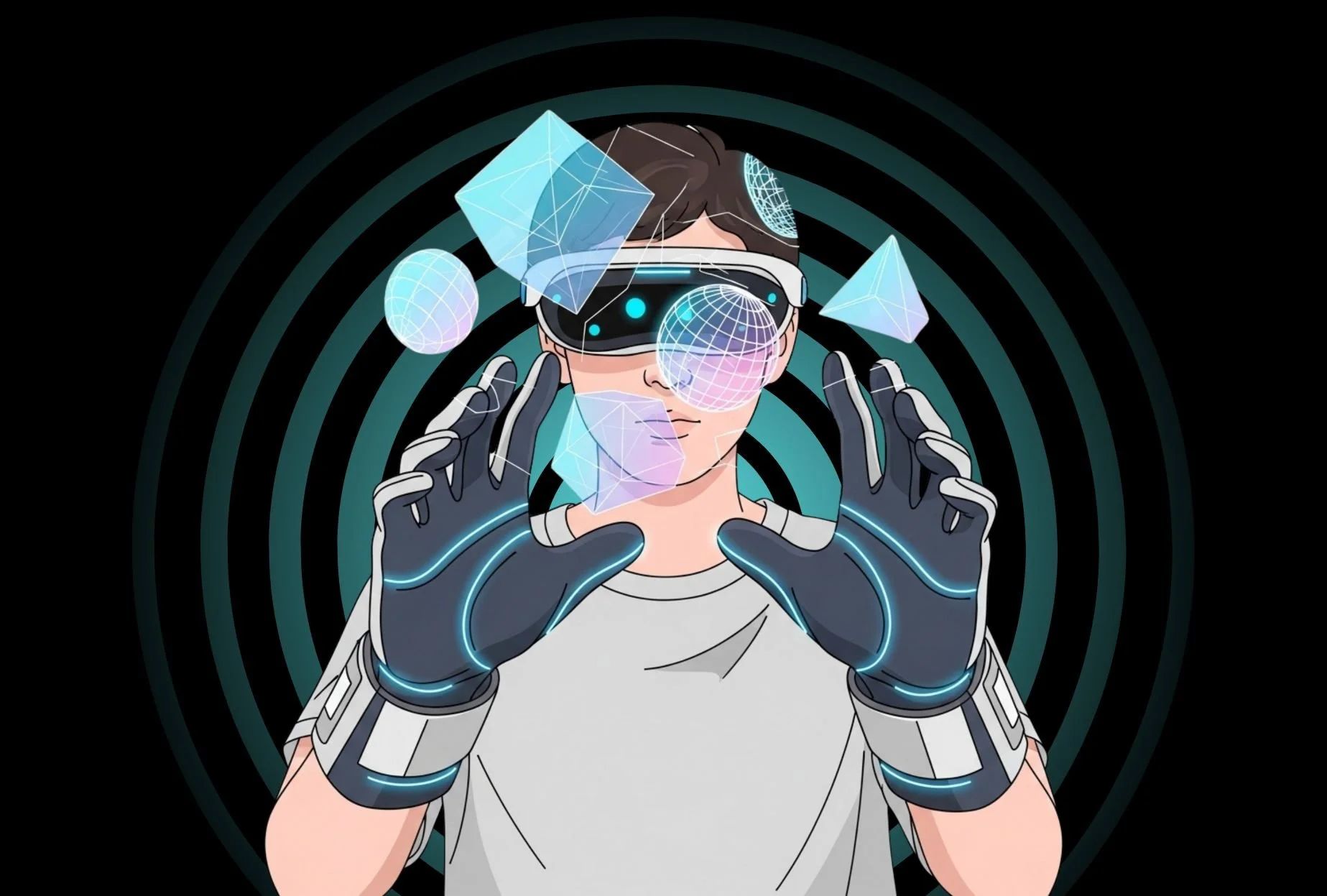
Mind and Matter: From Brains to Quarks
The question of how mind relates to matter sounds abstract, but it’s actually deeply personal. Every thought you’ve ever had, every feeling, every moment of awareness somehow arises in a universe made of particles, fields, and forces. So how does stuff turn into experience? Or does it?
Dualism vs. Monism: Two Big Camps
Traditionally, people have split into two major camps.
Dualism says mind and matter are fundamentally different things. Matter is physical, measurable, and public. Mind is private, subjective, and conscious. This fits everyday intuition - your thoughts don’t have mass, and your emotions aren’t sitting on the table - but it struggles to explain interaction. If mind isn’t physical, how does it push atoms around to make your body move?
Monism, on the other hand, says there’s really only one kind of thing. Everything - including mind - is ultimately made of the same underlying reality. Physicalism (the idea that everything is physical) is one popular form of monism, but it’s not the only one. Some versions suggest that reality is fundamentally mental, or that both mind and matter emerge from something deeper.
The argument isn’t settled, and that’s where things get interesting.
Qualia: The Awkward Middle
Even if you’re comfortable saying the brain produces the mind, there’s still a huge problem: qualia. Qualia are the raw, subjective “what-it’s-like” aspects of experience - the redness of red, the sting of pain, the taste of coffee. You can describe brain activity all day long, but none of those descriptions seem to contain the feeling itself.
This is why consciousness refuses to be fully explained away. You can map neurons, measure signals, and model behavior, but qualia stubbornly remain first-person. They don’t show up in equations, and yet they’re the most obvious part of being alive.
Enter the Quantum World
At first glance, quantum physics seems unrelated to consciousness. But when you zoom in far enough, the classical idea of matter as solid little balls breaks down completely.
In the quantum world:
Particles are excitations of quantum fields
Objects don’t have definite properties until measured
Reality is probabilistic, relational, and strangely observer-dependent
This doesn’t mean “consciousness creates reality” in a magical sense, but it does undermine the idea that matter is simple, inert, and self-explanatory. At the deepest level, matter behaves more like a set of mathematical possibilities than solid stuff.
Some thinkers argue that if matter itself is this weird and abstract, then maybe consciousness isn’t as alien to physics as it once seemed. Others speculate that consciousness might be linked to quantum processes, or that both mind and matter emerge from the same underlying quantum field structure.
These ideas are controversial, but they exist because classical explanations feel incomplete.
Monads and the Inner Side of Reality
Long before quantum theory, philosopher Gottfried Wilhelm Leibniz proposed the idea of monads - basic units of reality that are not physical objects, but centers of experience or perspective. Each monad reflects the universe from its own point of view.
While monads sound mystical, they oddly resemble modern ideas where fundamental entities are defined more by information and relationships than by physical shape. Some modern philosophers see monads as an early attempt to deal with the same issue we face today: how to account for inner experience in a world described by external laws.
Artificial Intelligence: Mind Without Matter?
Artificial intelligence throws fuel on the fire. AI systems can already write essays, recognize faces, and hold conversations. From the outside, they can look intelligent. But are they conscious? Do they have qualia?
If mind is purely a matter of computation and information processing, then in principle a machine could have a mind. But if consciousness depends on specific physical properties - or on something deeper than computation - then AI might always be an imitation rather than the real thing.
This question forces us to clarify what we mean by “mind.” Is it behavior? Intelligence? Self-awareness? Or subjective experience? Depending on your answer, AI is either the beginning of artificial minds or just very sophisticated tools.
So Where Does That Leave Us?
We don’t yet have a single theory that cleanly unites mind, matter, quantum fields, and consciousness. What we do have is a growing sense that the old picture - dead matter plus a mysterious mind tacked on - doesn’t work very well.
Whether reality is fundamentally mental, physical, informational, or something else entirely, the gap between equations and experience remains one of the deepest puzzles we know. The mind may emerge from matter, matter may have an inner aspect, or both may arise from a deeper structure we don’t yet understand.
Either way, the strange thing is this: the universe has produced something capable of wondering what it’s made of. And whatever mind and matter turn out to be, that fact alone suggests the story is far from simple - and far from finished.
