
What makes us squabble
When it comes to romantic relationships, there is a major cause for mundane quarrels and daily little conflicts. It has nothing to do with real world reasons for concern. It has everything to do with our emotional attitude and our automatic behavioral responses.
I had to find it out myself. I’ve been on holiday in Croatia and one morning I found myself in a confrontational talk with my wife about breakfast. What I discovered from this small episode is that there is a true emotional layer in human mind which is utterly irrational and represents the real cause for most of our inner suffering.
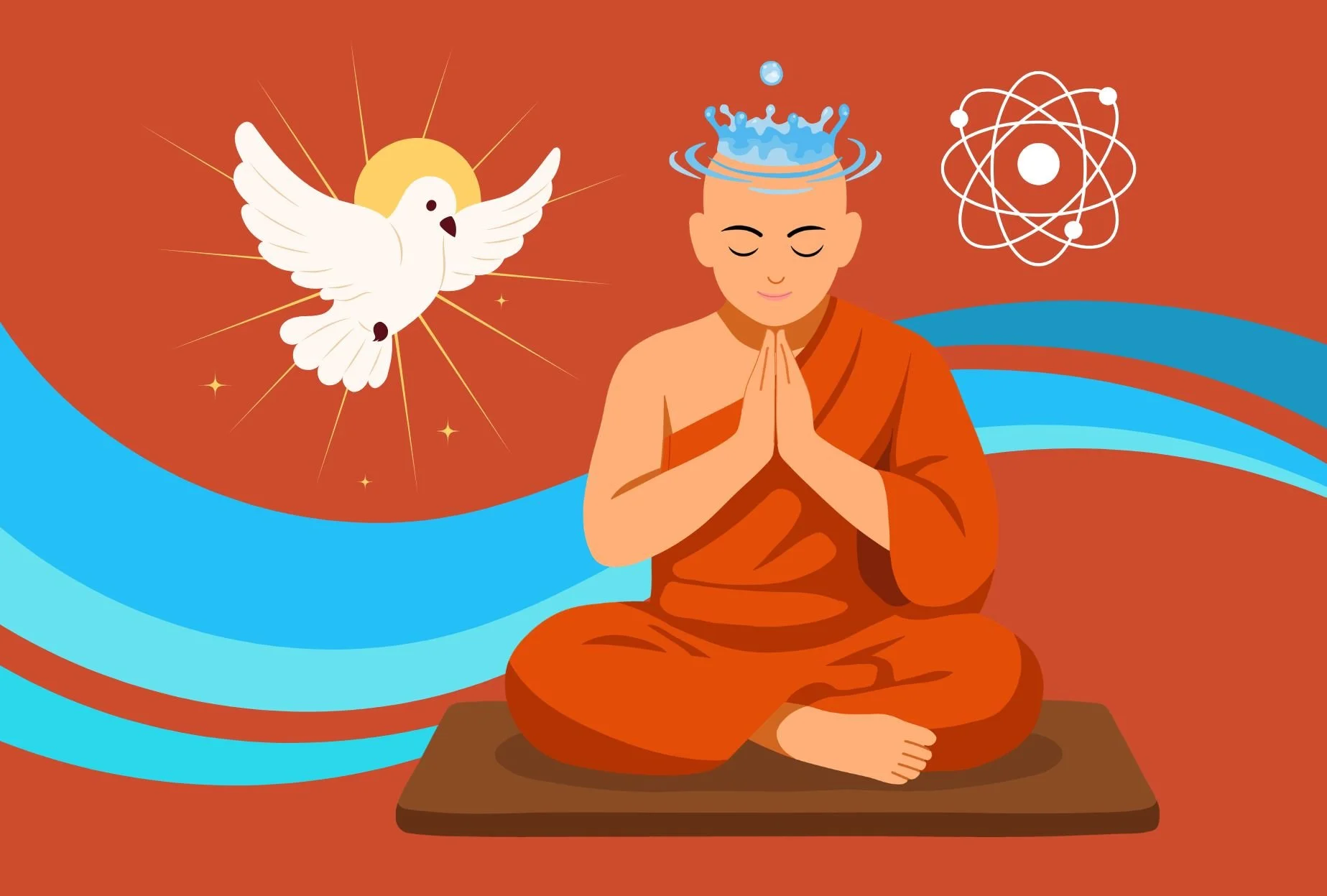
Consciousness, Fields and Spirits: Why Science Could Explore What Spirituality Has Always Taught
For centuries, humans have sensed that consciousness extends beyond the boundaries of a single physical body. Spiritual traditions - from Theosophy to mystic religions - describe subtle bodies, auras, and spirits as integral parts of reality. Science, however, has largely avoided these topics. It declares that matter is unconscious, that life and mind arise purely from biochemical interactions, and that questions of souls or spirits belong to the domain of metaphysics rather than experiment.
Yet what if this avoidance is not because the phenomena are impossible or nonexistent, but because science lacks the conceptual framework to study them? The possibility of spirits as localized, organized, conscious fields could align with modern physics and biology, if only cultural taboos and paradigmatic inertia did not prevent investigation. This article explores that possibility and argues that science and spirituality need not be enemies - they could be complementary avenues to understanding reality.
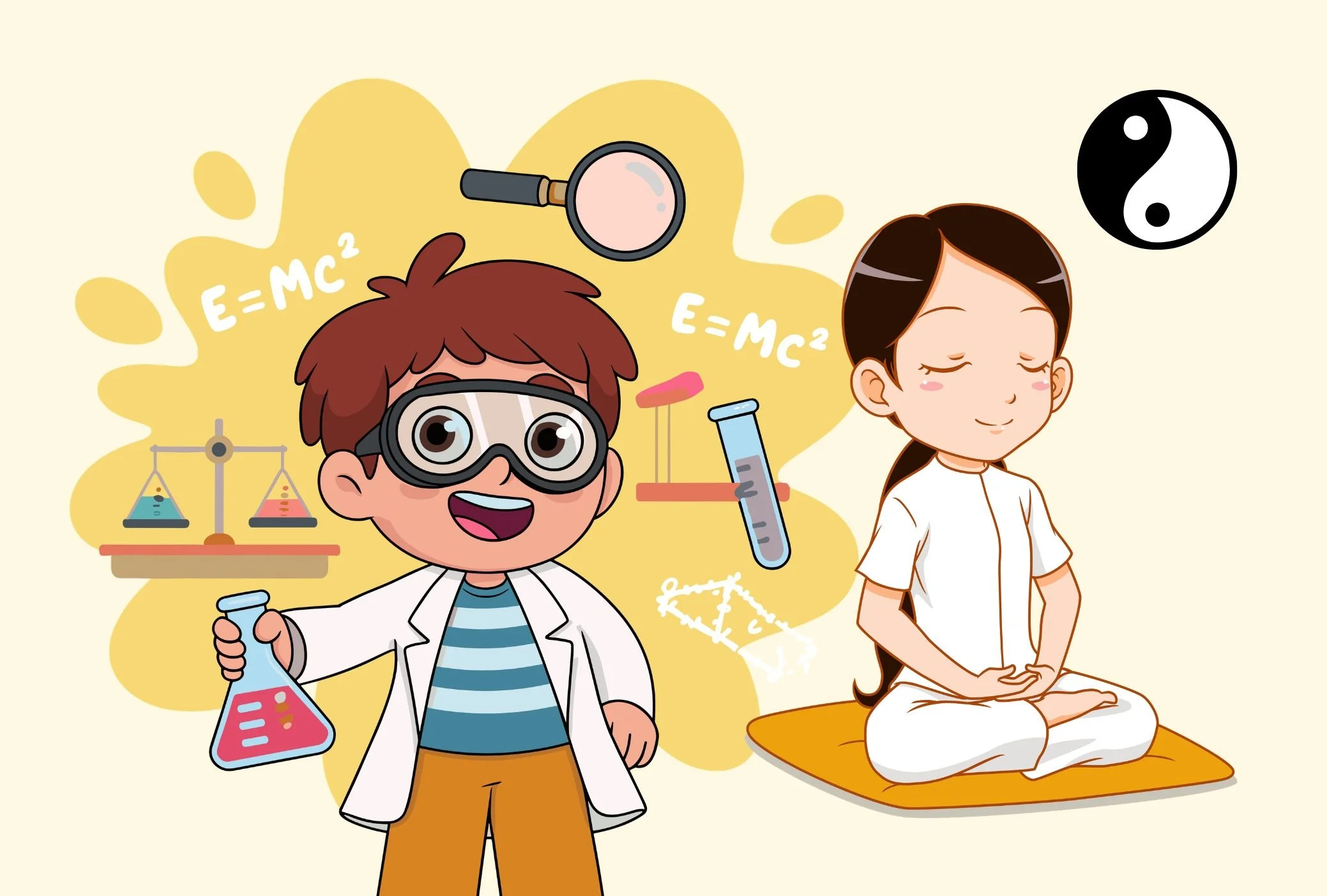
Science and Spirituality: Two Ways of Looking at the Same Reality
For a long time, I accepted the idea that science and spirituality were fundamentally opposed. Science dealt with facts, matter, and what could be measured. Spirituality and religion dealt with inner experience, meaning, and things that could not be proven. One was objective and rational, the other subjective and symbolic. The more science progressed, the less room there seemed to be for anything resembling spirit, soul, or transcendence.
But the deeper I looked into modern science, especially physics, the more this neat separation began to fall apart. Not because science suddenly “proved” spiritual ideas, but because it quietly dismantled the worldview that once made them seem impossible. What emerged instead was something unexpected: a picture of reality that is far less solid, far less mechanical, and far more subtle than everyday intuition suggests. A picture in which science and spirituality no longer look like enemies, but like two perspectives aimed at different aspects of the same underlying world.
Pain, Suffering, and the Art of Living Well
Pain is one of those topics that every human being understands intuitively, yet struggles endlessly to make sense of intellectually. We try to avoid it, fight it, deny it, medicate it, spiritualize it, or explain it away, but no matter how sophisticated our strategies become, pain remains a constant companion of physical life. At some point, each of us realizes - sometimes gently, sometimes violently - that life in a physical body is characterized by certain degrees of discomfort. In Buddhism, this is commonly called suffering. And while the word itself carries heavy emotional weight, its meaning is often misunderstood.
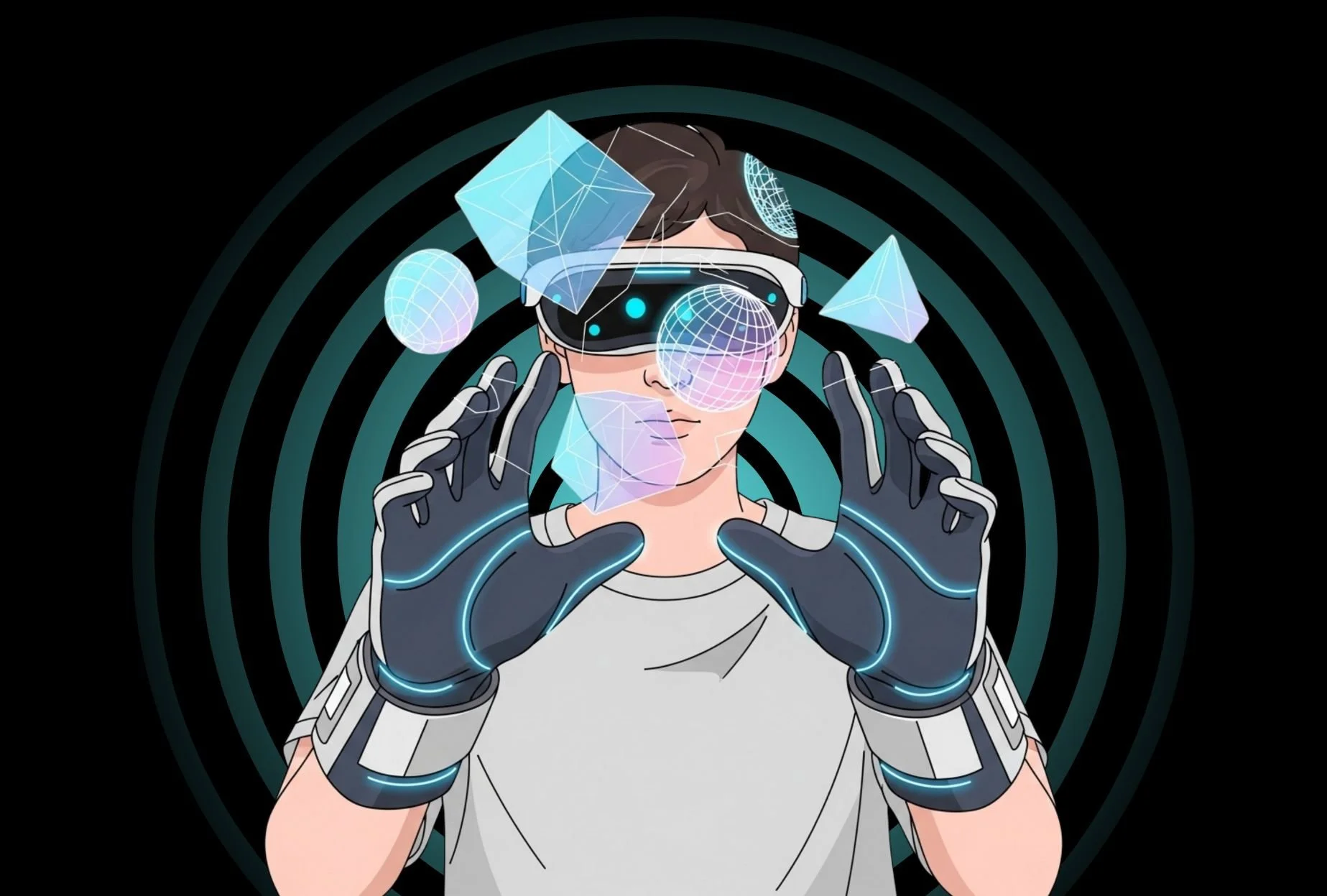
Mind and Matter: How Consciousness, Quantum Physics, and Reality Intersect
The question of how mind relates to matter sounds abstract, but it’s actually deeply personal. Every thought you’ve ever had, every feeling, every moment of awareness somehow arises in a universe made of particles, fields, and forces. So how does stuff turn into experience? Or does it?
Trusting Life When You Don’t Know the Outcome
In the final weeks of December, just before Christmas, I experienced something that again revealed to me how I understand trust in life, and trust in the universe. It wasn’t a dramatic revelation or a mystical event. It was quiet, uncomfortable, and deeply human. It showed me how little trust I truly had, and how heavy life becomes when you believe that everything rests solely on your shoulders.
We often grow up with the notion that the universe is unconscious, that there is no guiding intelligence behind life, no underlying order, no rules or principles shaping our experience. And if you truly believe that, then it’s no wonder so many people live in constant anxiety. If you think literally everything lies in your hands, then you feel responsible for all that happens to you. Every delay, every obstacle, every uncertainty feels like a personal failure. That is simply too heavy a psychological burden to carry as a limited human being with imperfections.
The Quiet Work of Love: How to Sustain a Healthy Relationship
Every relationship is made up of two people. And those two people both contribute to the wellbeing of the relationship - and, at times, to its struggles. It always takes two for a quarrel, and often it is difficult, if not impossible, to untangle who started what, and when.
Maintaining a healthy relationship is, in many ways, simple - but it is not easy. It asks something honest and ongoing of us. Especially in long-term partnerships and marriage, the question is not whether challenges will arise, but how we meet them. What, then, are the most difficult struggles in a relationship - and how can we meet them with kindness, maturity, and care?
The Development of Thought: From Emotional Reaction to Rational Understanding
Human thinking is not a fixed ability - it develops. What we commonly call “intelligence” or “reason” is in fact the result of a long internal process: the gradual construction of an inner mental structure that mirrors reality as accurately as possible. This structure is not built overnight. It evolves through stages, shaped by experience, emotion, abstraction, and logic.
Understanding how thinking develops is essential - not only to improve reasoning, but to recognize why people cling to dogmas, fall into black-and-white thinking, or resist new facts. The journey from primitive thought to a fully developed mind reveals why truth is difficult, why emotions so often dominate reason, and how genuine understanding becomes possible.

Quantum Mechanics: How To Reconcile Science & Spirituality In A New Worldview
It’s not enough to know how to behave right - it’s also crucial to have a solid understanding of reality. We need a correct worldview to base our behavior on. Without that basis we are left in the dark.
What is reality, actually? Don’t we experience our own realities in the places we live, in the places we work or go to school, and in the places we travel to? On closer inspection we have to admit that our mundane reality is just a superficial layer, an outer facade of happenings. Reality is vaster than what we can directly observe and feel with our five senses.
Let me use science - quantum mechanics specifically - to provide us with the necessary impulse for the right intuitions about the nature of reality. It’s waves all the way down.

How Emotional Evolution Shapes Who We Become
If you trace human emotions back far enough, you find something incredibly simple at the core: basic survival reactions that helped early life navigate the world. Long before emotional intelligence existed, living beings relied on instinctive “move toward this” or “avoid that” responses. Pleasant sensations meant “safe,” unpleasant ones meant “danger.” These tiny seeds eventually blossomed into the emotional complexity humans now experience. Emotionality may have started in our ancient past, but emotional maturity is where our future lives.

Human Nature & the Mind: How Thought and Perception Shape Experience
Every moment of your life is shaped by two forces: the world as it exists “out there”, and the world your mind creates “in here”. Even though everyone walks through the same physical reality, no two people perceive it the same way. That’s because consciousness - not just the brain, but the full awareness that includes mentality, attention, perception, memory, and emotion - constantly interprets what the senses pick up. Consciousness isn’t a static thing. It moves between waking states, sleep, dreams, daydreams, and various altered states that meditation, music, movement, or intense feelings can trigger. All these states mix how we sense and how we interpret, which means our experience is always a blend of objective facts and subjective meaning.

The Nature of Feelings: Energy, Emotion, and the Evolution of Desire
Emotions and feelings are often used as if they mean the same thing. But in psychology and emotional intelligence, there’s a crucial distinction.
Emotion is pure biological arousal - a surge of energy, excitement, or bodily activation. Feeling is emotion shaped by thought - the mind’s conscious interpretation of an emotional state. Emotions are the raw energy of life, while feelings are emotions made aware - the bridge between instinct and intellect.
This subtle but vital difference explains why emotions are the foundation of our psychological life, and why understanding them is key to personal growth and self-control.
Attain Inner Peace - Let Go Of Expectations
What does that mean to “let go of desire”. It seemed to be such a big deal in many philosophical and moral teachings. It could be stated that this expression implies renunciation, a detachment from the results of one’s own actions. Still, I never quite understood how this inner detachment attitude correlated with the virtue of self-control. Then, one day, the realization struck me like lightning after a long period of reflecting. Let me explain…

Daily Challenges In Raising Children
Change starts with the adults and their lack of self-reflection can easily corrupt the development of a younger generation. There is hardly anything more important for a society than raising their children. The next generation is our future and the way we teach them to be is the way society is going to become. Children inherit our values and ideals. And they also inherit our stupidities.
Analytical Thinking, Its Drawbacks & The West
Do you know this feeling when you get confronted with the same problems in life, not knowing how to deal with them right in your mind, although you analyzed the thoughts many times over? Don’t you think something is perhaps missing in your intellectual life, something very crucial to seeing the bigger picture in your way of thinking?
A Manifesto: Purpose in the Age of Noise
What truly matters in life? It’s a bold question - perhaps the boldest of all - and yet, I feel compelled to share my perspective. This isn’t just another reflection; it’s the beginning of something new, something ambitious. A fresh direction that calls for clarity, conviction, and purpose. It calls for a manifesto. Before I lay out the vision, let me offer a glimpse into its heart.

When Life Shakes Us
There are moments in life when everything seems to shift: a new job, the end of a relationship, a move to an unfamiliar place - or simply that inner whisper telling you it’s time for something different. These transitions can be unsettling, even frightening. But within them lies a hidden force. A force that pulses through every living thing, every moment, every breath: CHANGE.

A Personal Journey Through Anxiety
Anxiety can catch us off guard - not just in stressful or painful moments, but sometimes when life is at its most beautiful. That’s what happened to me recently.
I was sharing a wonderful experience with someone I love. The day was perfect, the surroundings awe-inspiring. But out of nowhere, I felt dizzy. Disoriented. My chest tightened, my thoughts spiraled, and fear took over. It was as if the ground beneath me vanished and I was floating in a terrifying void.
If you've ever felt this kind of internal storm, know this - you’re not alone.

Why Knowledge, Self-Awareness, and Compassion Matter More Than Ever
In a world overwhelmed by opinion, speed, and noise, it’s easy to forget the deeper values that should guide human life. Every day, we’re flooded with political debates, social unrest, and technological advancement, yet few pause to ask the deeper question: what is really missing in modern society?
It’s a call to self-development. A call to build a new foundation - not just for your own life, but for society at large. And that begins with honesty of thought, awareness of feeling, and a commitment to conscious development.

The Silent Struggle of Moderate People: Why Good Intentions Aren’t Enough
In a world swirling with chaos and clashing ideologies, you might expect moderate voices - the thoughtful, well-meaning middle - to be the steady force guiding us forward. After all, moderation and reason often sound like the ideal foundations for progress and harmony. Yet, paradoxically, it’s precisely these average, moderate people who frequently become part of the problem, not the solution. Why is that?